

Revolutionary War Sites Along the Essex Coastal Scenic Byway
March 19, 2026
Most visitors come to the North Shore for the seafood, the beaches, and the scenery. But the 90-mile Essex Coastal Scenic Byway also runs through one of the most significant Revolutionary War landscapes in America — and much of it is hiding in plain sight.
Here are 7 of the most significant Revolutionary War sites you can explore along the Byway today. As you plan your visit, keep in mind that historic preservation is an ongoing effort and your visit helps support and bring awareness to these landmarks.
Leslie’s Retreat & the North Bridge (Salem)
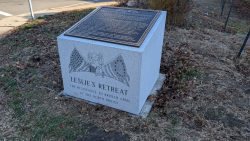
Address: North Bridge, Salem, MA (near the intersection of Bridge Street and Federal Street)
On February 26, 1775 — nearly two months before the battles at Lexington and Concord, the first armed standoff of the American Revolution took place in Salem. British Colonel Alexander Leslie landed 240 soldiers at Marblehead under orders to march to Salem and seize a cache of cannons hidden by the colonial militia. Word spread quickly, and the Salem militia was waiting at the North Bridge when Leslie arrived. After a tense standoff at the drawbridge, which had been raised to block the British advance, Leslie negotiated a symbolic crossing and then retreated back to his ships, mocked the entire way.
No shots were fired, no one was killed, and the cannons were safe. It was the first time the British military was turned back by colonial resistance, and it happened right here in Salem, one of our Byway communities! The North Bridge where the standoff occurred still stands, and a historical marker commemorates the event.
Also nearby: Fort Lee on Salem Neck is one of the few largely intact earthwork forts from the Revolutionary War era remaining in Massachusetts. Located near Fort Avenue, it is freely accessible and offers views of Salem Harbor. Fort Pickering at Winter Island Park, also used during the Revolution, is open to visitors seasonally.
Don’t miss: The Leslie’s Retreat Memorial Dedication on April 10, 2026!
Jeremiah Lee Mansion (Marblehead)
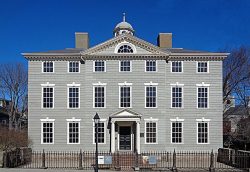
Address: 161 Washington Street, Marblehead, MA 01945
Colonel Jeremiah Lee was one of the wealthiest merchants in colonial Massachusetts and one of Marblehead’s most passionate Patriots. His magnificent 1768 Georgian mansion served as an informal headquarters for the Patriot cause on the North Shore, and Lee worked tirelessly to secure arms and supplies for the rebellion. On the night of April 18, 1775, Lee was meeting with Samuel Adams and John Hancock at a tavern in Menotomy (now Arlington) when word came that British troops were on the move. Fleeing into the night, Lee hid in a cold field and contracted a fatal illness. He died six weeks later, never seeing the independence he had fought so hard to achieve.
Today the Jeremiah Lee Mansion is open to the public and operated by the Marblehead Museum. Inside, visitors can view General John Glover’s desk and a letter written to him by George Washington. The mansion is one of the finest surviving examples of pre-Revolutionary Georgian architecture in America.
Visit: marbleheadmuseum.org for hours and admission information.
Fort Sewall (Marblehead)
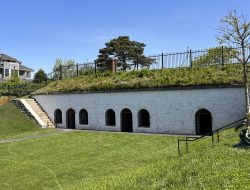
Address: 8 Fort Sewall Lane, Marblehead, MA 01945
Perched on a rocky headland overlooking the entrance to Marblehead Harbor, Fort Sewall has stood watch over these waters since 1644. The fort was significantly strengthened during the Revolution and served as a base for Glover’s Marblehead Regiment as they trained and prepared for war. It is one of the most dramatic and freely accessible historic sites on the entire Byway — and just a short walk from downtown Marblehead, with sweeping harbor views and interpretive signage.
Birthplace of the American Navy (Beverly)
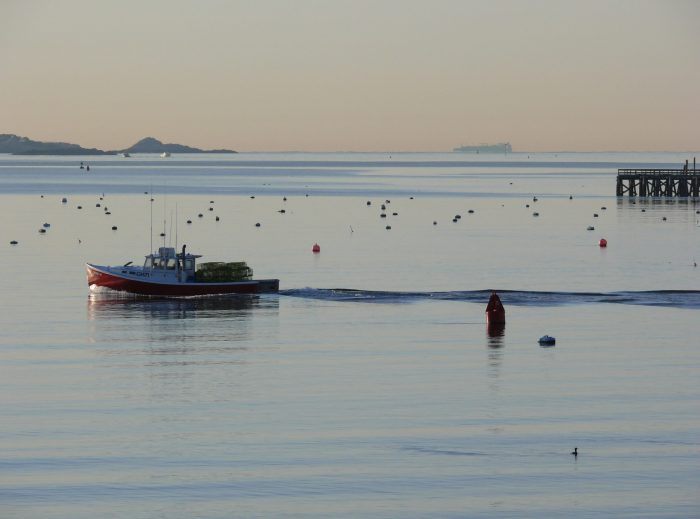
Address: Beverly Harbor waterfront; John Cabot House at 117 Cabot Street, Beverly, MA 01915
In the summer of 1775, General George Washington turned to Colonel John Glover of Marblehead for help disrupting British supply lines into Boston. Glover made available his schooner Hannah (named for his wife) along with his wharf in Beverly Harbor. The Hannah was outfitted there as an armed vessel in September 1775, giving Beverly the claim as “Birthplace of the United States Navy”. Washington’s small fleet of schooners, known as “Washington’s Navy,” operated out of Beverly and captured dozens of British supply ships.
The Beverly waterfront area where this history unfolded is accessible to visitors today. The John Cabot House (1781), built by a wealthy privateer captain and now operated by the Beverly Historical Society, offers exhibits on the town’s maritime and Revolutionary War history, including programming for children.
Visit: historicbeverly.net for hours and upcoming programs.
Stage Fort Park & the Battle of Gloucester (Gloucester)
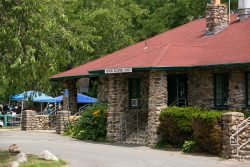
Address: 24 Hough Avenue, Gloucester, MA 01930
On August 8, 1775, HMS Falcon, a British sloop of war, chased two colonial merchant schooners into Gloucester Harbor. When the captain sent armed boats to take possession of one of the grounded vessels, the townspeople responded! Militia assembled at the waterfront, breastworks were thrown up overnight, and the British were driven off after hours of combat. The HMS Falcon retreated, having lost several small boats and failed to take either schooner. It was the second naval engagement of the entire Revolutionary War.
A cannonball hole from the Falcon’s fire is still reportedly visible in the Unitarian Universalist Church in downtown Gloucester. Stage Fort Park, which contains the remnants of a 1692 fort used during the Revolution and later conflicts, is freely open to the public year-round and serves as the Gloucester Visitor Center during the summer season.
Don’t miss: The Battle of Gloucester Reenactment, happening June 20-21, 2026!
Custom House Maritime Museum & Market Square (Newburyport)
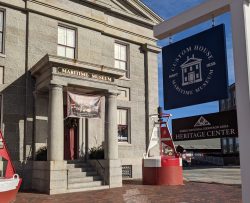
Address: 25 Water Street, Newburyport, MA 01950
When the British closed Boston Harbor in 1774, Newburyport became one of the most important alternative ports for the Patriot cause. The town supplied munitions, food, and textiles to the Continental Army, served as a staging point for troops heading to Quebec, and launched dozens of privateers to raid British merchant vessels. Few North Shore towns contributed more to the war effort.
The Custom House Maritime Museum tells this story directly, with exhibits on Newburyport’s maritime heritage and its role in the Revolution. A short walk away, Market Square is the site of one of the North Shore’s lesser-known acts of colonial defiance: when Parliament taxed tea, local men broke into the powder house where the taxed tea had been stored and burned it in the square — a North Shore parallel to the Boston Tea Party that most visitors have never heard about.
Visit: customhousemaritimemuseum.org for hours, admission, and upcoming events including Rev 250 programming.
The Glover Farmhouse (Swampscott)
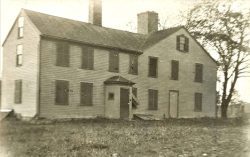
Address: 299 Salem Street, Swampscott, MA
General John Glover is one of the most consequential figures of the Revolutionary War, and his story is woven through nearly every stop on this list. He launched Washington’s Navy from Beverly. His Marblehead Regiment ferried the Continental Army off Long Island after the disastrous Battle of Brooklyn. And on the night of December 25–26, 1776, it was Glover’s men who rowed Washington and 2,400 soldiers across the ice-choked Delaware River before the Battle of Trenton — one of the most daring military operations in American history.
The final home Glover purchased after the war was a 1750s farmhouse in what is now Swampscott’s Vinnin Square. It is one of the few surviving physical connections to this remarkable figure on the North Shore. The property was originally seized from a Loyalist during the war; Glover bought it in 1781.
The Glover Farmhouse is not a polished visitor destination. The structure has been embedded in a former restaurant building for decades and is currently threatened with demolition as the site faces development pressure. A community preservation effort, “Save the Glover Farmhouse,” is actively working to protect and restore it.
This is a site worth knowing about, even if you can’t walk through it today. The effort to save it is part of the larger story of how communities along the Byway are working to hold onto the physical evidence of a history that shaped the nation. If you’re interested in supporting that work, the “Save the Glover Farmhouse” initiative welcomes community involvement.
Visit: savetheglover.org for information on preservation efforts and how to get involved.
For more information on Revolutionary War history in Essex County, visit essexheritage.org/rev250.